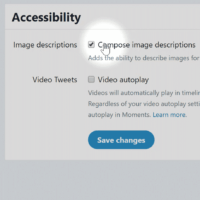
When Rian Rietveld resigned from the WordPress accessibility team on October 9, I decided to track the fallout in an ongoing Twitter thread. The subsequent weeks and days proved to be wonderful insight into how a project can suffer when accessibility is not built in from the start. When subject…
In the post Toggling Animations On and Off Kirupa Chinnathambi does a great job of outlining the value in giving users a choice over seeing animations. Part of that is by honoring preferences users have already made in their operating systems to reduce the amount of animation they see. I…
Web developers around the world have celebrated Saturnalia solstice Isaac Newton’s birthday Christmas with advent calendars covering web-related topics. As a result, you may recognize some of the ones listed below. Every year I miss a few on day one, so add a comment or tweet me if you have…
The slides from my talk at Harbour Front Hong Kong follow. If you cannot view the embed, visit them directly at SlideShare. Embedded Videos There were two videos in my talk. They will not play in the SlideShare embed, so I stuffed them below. Slide 53 The video demonstrates how…
The slides from my talk at CodeDaze follow. If you cannot view the embed, visit them directly at SlideShare. Embedded Videos There were two videos in my talk. They will not play in the SlideShare embed, so I stuffed them below. Slide 56 The video demonstrates how a screen reader…
WordCamp Europe has wrapped up in Belgrade. I presented a (not quite) three hour workshop on accessibility, specifically designed to be computer-free. I may have re-used a few slides from my presentation at last year’s WordCamp, but overall this is new material with some WCAG 2.1 references thrown in for…
Related Other posts in this accidental series: Layout as a Clue to Semantics Display: Contents Is Not a CSS Reset Tables, JSON, CSS, ARIA, RWD, TLAs… Tables, CSS Display Properties, and ARIA A Responsive Accessible Table Hey, It’s Still OK to Use Tables When I presented my talk CSS Display…
I came back to London to speak at WordCamp London, and as before it did not disappoint (I spoke last year). The crowd is great, the WordPress core folks who put up with me are gracious, and the accommodations from the organizers are ace. If the embed is wonky or…
Perhaps a testament to how little I might value GitHub contributions. GitHub profile pages are, to many, the de facto place to quickly judge the value of a developer. The contributions chart is an at-a-glance visual indicator of that value. I disagree completely with the notion of the chart (or…
Twitter persists. Even if you have moved to Mastodon, Twitter will persist. As such, we need to continue to ensure it is accessible to all users. This post gathers some tips you can and should use. Hashtags Emoji Unicode Image Alternative Text Embedding Alternative Text in a Tweet Web Interface…
This post is both a feature request and an opportunity to share my thoughts in a format I find easier to use than a Bugzilla report. And Jen Simmons said I could do it as a blog post. So there. Firefox Grid Inspector I am a big fan of the…
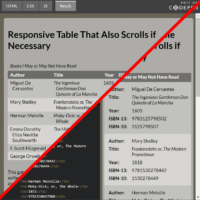
Painfully slow demonstration of the example table resizing and different media queries kicking in. After writing (again) that it is ok to use tables, and after providing quick examples of responsive tables, I received questions about why I used some of the code I did. I am going to attempt…