I had some issues using the Disability:IN 2024 Conference Agenda so I made a bookmarklet: 🔗 Fix Disability:IN Agenda You may have seen this originally posted as a CodePen, but I opted to move it here since I can embed videos showing a before-and-after experience. Fixes Removes empty trigger link…
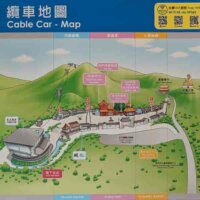
TL;DR: You probably don’t need to name that landmark. The Ngong Ping Village tourist trap on Hong Kong’s Lantau Island. All the pricey tourist spots have visible named landmarks on the map, but the ones people generally care about (bathrooms, food, that lovely tea house) are not. The accompanying tactile…
I ran across a survey from Tilburg University on the experiences and perspectives of image describers. It asked what process I follow to write image alternative text, and it occurred to me that I don’t use a checklist or guideline anymore. That may or may not be a good thing,…
I ran a 3-hour workshop at John Slatin AccessU 2024 in Austin titled “Prototyping Accessibility.” The nice thing about workshops is that they are a dialog between the participants as much as with me. The less nice thing about workshops is standing up for three hours. I do not make…
TL;DR: Keep your image alternative text brief, devoid of special characters, empty of URLs, and ideally in one language. Here We Go Sometimes you can have too much alternative text, particularly for an <img>. I don’t mean there is a limit to what is allowed, I mean there is a…
Trying Markdown code indicators in my post title, not because I want it to convert, but because I am curious if people will ping me to tell me it broke their RSS readers. Oh, and so it converts to code when pasted into your GitHub issues. ARIA note Role A…
How the <abbr> element is defined and exposed, along with the title attribute: § 4.5.9 The abbr element from WHATWG. ARIA in HTML entry on <abbr> notes it has no implicit role and naming is prohibited. Which is probably why Core Accessibility API Mappings 1.2 does not list it. HTML…
This post supplements Browser Video Players Review. There I wade into the de facto accessibility of the <video> element based on the default video players provided by browsers. The results of my testing here update the tables in that post. One of the primary challenges of using the browsers’ default…
Yeah, that’s not exactly a helpful title. The relatively new Web Platform Baseline offering does not track browser support for accessibility features built into the web platform. If you need to understand whether browsers support accessibility features as your own base level set of requirements, for legal or other compliance…
Before you get too far into this post, maybe read Browser Video Players Review. There I wade into the accessibility of the <video> element based on the video players browsers provide. Then maybe read Scott Jehl’s How to Use Responsive HTML Video (…and Audio!). I am leaning on support in…
Again, title says it all. However, there is an equally bad opposite approach you might be tempted to use, so let me clarify: Don’t use ARIA grid roles simply to make rows clickable in a table, and Don’t put click handlers on table rows (<tr>s) to make them clickable. Step…
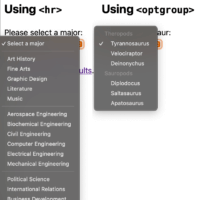
The native HTML <select> is renowned for its styling limitations. Even with control over the closed state and trigger appearance, the options themselves are still defined primarily by the browser and the OS. While I think this is generally fine (preferred, even), the <selectlist> (nee <selectmenu>) hopes to change that.…