For context on the title, working backward from the end, GAAD is Global Accessibility Awareness Day. Its purpose, as explained at accessibility.day, is to get everyone talking, thinking and learning about digital access/inclusion and people with different disabilities.A11yship is a play on the numeronym for accessibility (a11y) and the concept of being an ally to marginalized groups, or allyship.
This year, 2022, marks GAAD’s 11th year of raising awareness and bringing the overall topic of accessibility to the fore. It is also another year of growing performative messaging from marketing departments across companies and organizations. Never mind the number of overlapping events as organizations try to leverage their brand by doling out product and service pitches via anemic webinars.
Over the last few years I have gotten into the habit of tweeting this the week before GAAD:
I don’t know which companies need to hear this, but it’s ok, you don’t have to hold a #GAAD event. Maybe just share all the other ones or recommend one to check out. Let your employees attend one.
You don’t have to follow the CSUN model of 40 competing events. In fact, if you don’t have one on the calendar already, it’s too late. Let it go.
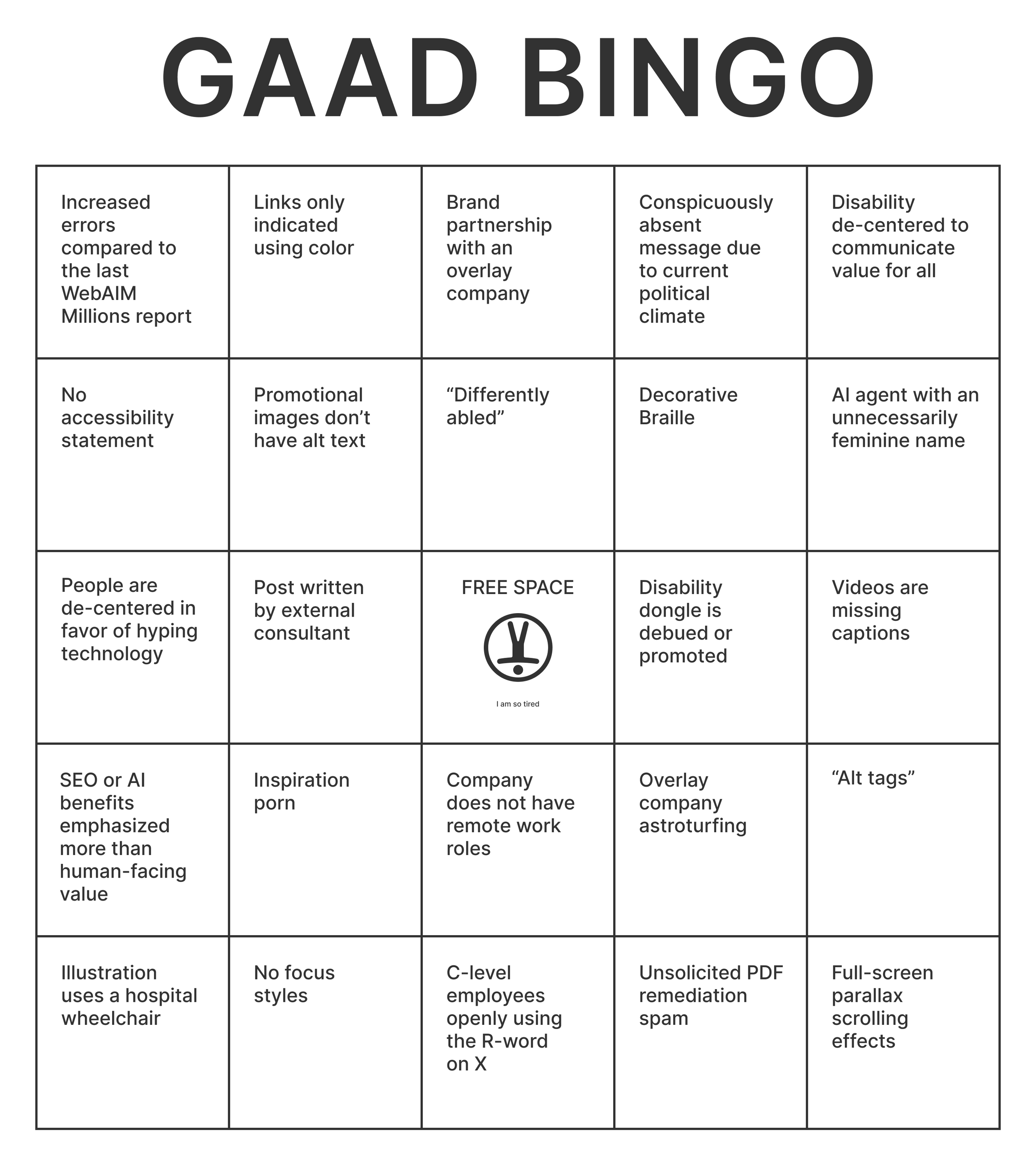
Each year I watch the messaging from organizations who roll out their one connection to disability and promote it. This can be a win when it helps normalize the idea of fellow humans just being, you know, fellow humans. It can be a problem when the effort is tokenism. It can be a signal of lack of organizational commitment when the messaging itself is inaccessible.
Tweet Accountability
Remember the PayGapApp bot sharing gender pay gaps of organizations tweeting about International Women’s Day? This year we have a Twitter bot showing just how performative some organizations are: @GAADBot
@GAADBot finds image tweets about #GAAD that lack alternative text and reminds the tweeter to add alternative text to their images while also including a link to Twitter’s instructions for adding alternative text. That resource makes the call-out a learning experience as well. Hopefully.
What the bot does not, and cannot, do is identify tweets that rely on too many emoji, fail to use mixed case in their hashtags, exclude captions from videos, have terrible contrast in the images, push weird memes, and so on. I have tips for all of those, in case you need some.
Surfing the #GAAD hashtag on its own shows some organizations piggybacking on it that have nothing to do with, and are not tweeting about, accessibility. This is nothing new. But the hashtag is also being used to shill some accessibility products, such as the occasional overlay, which in one case @GAADBot found owing to its reliance on alt-less images (and called out directly).
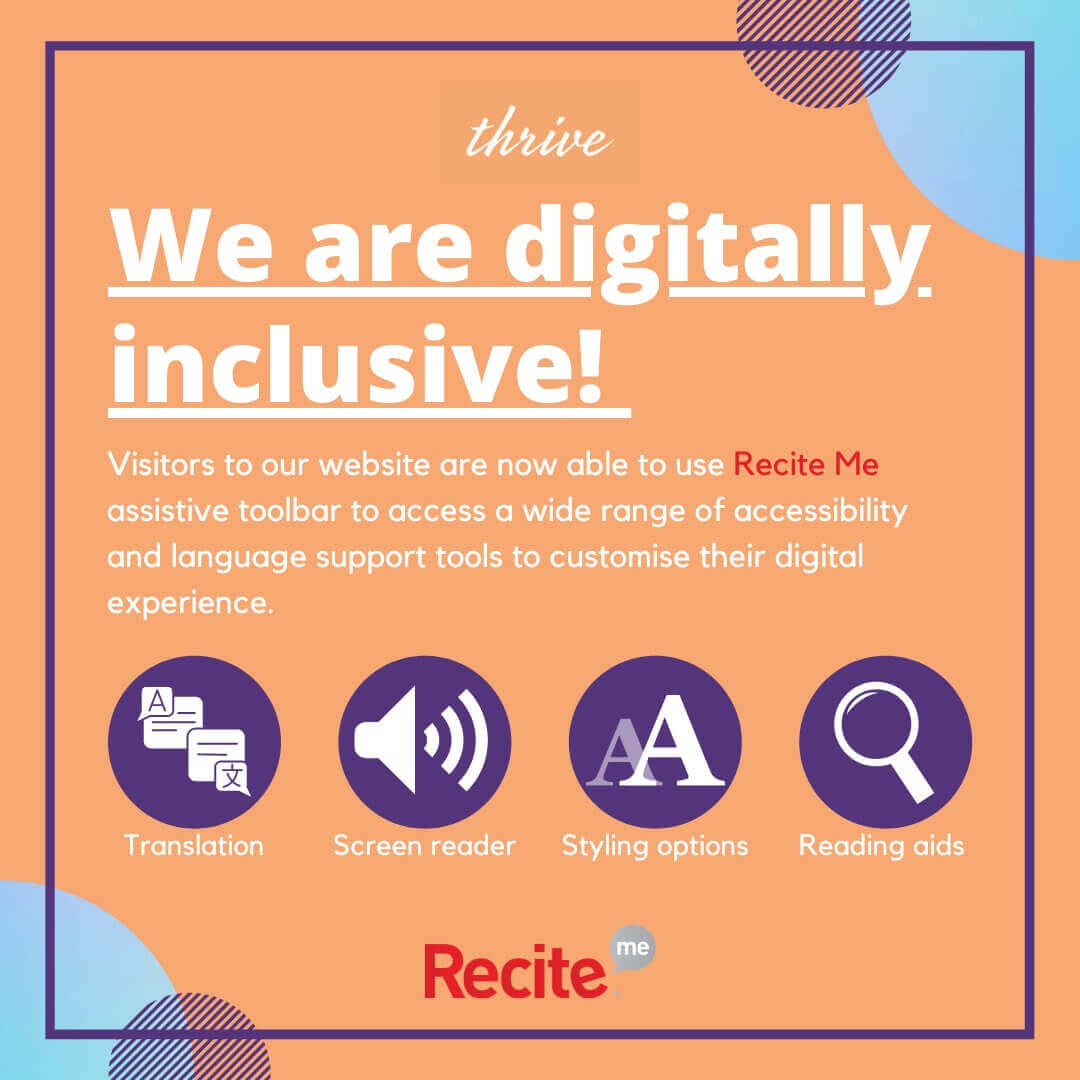
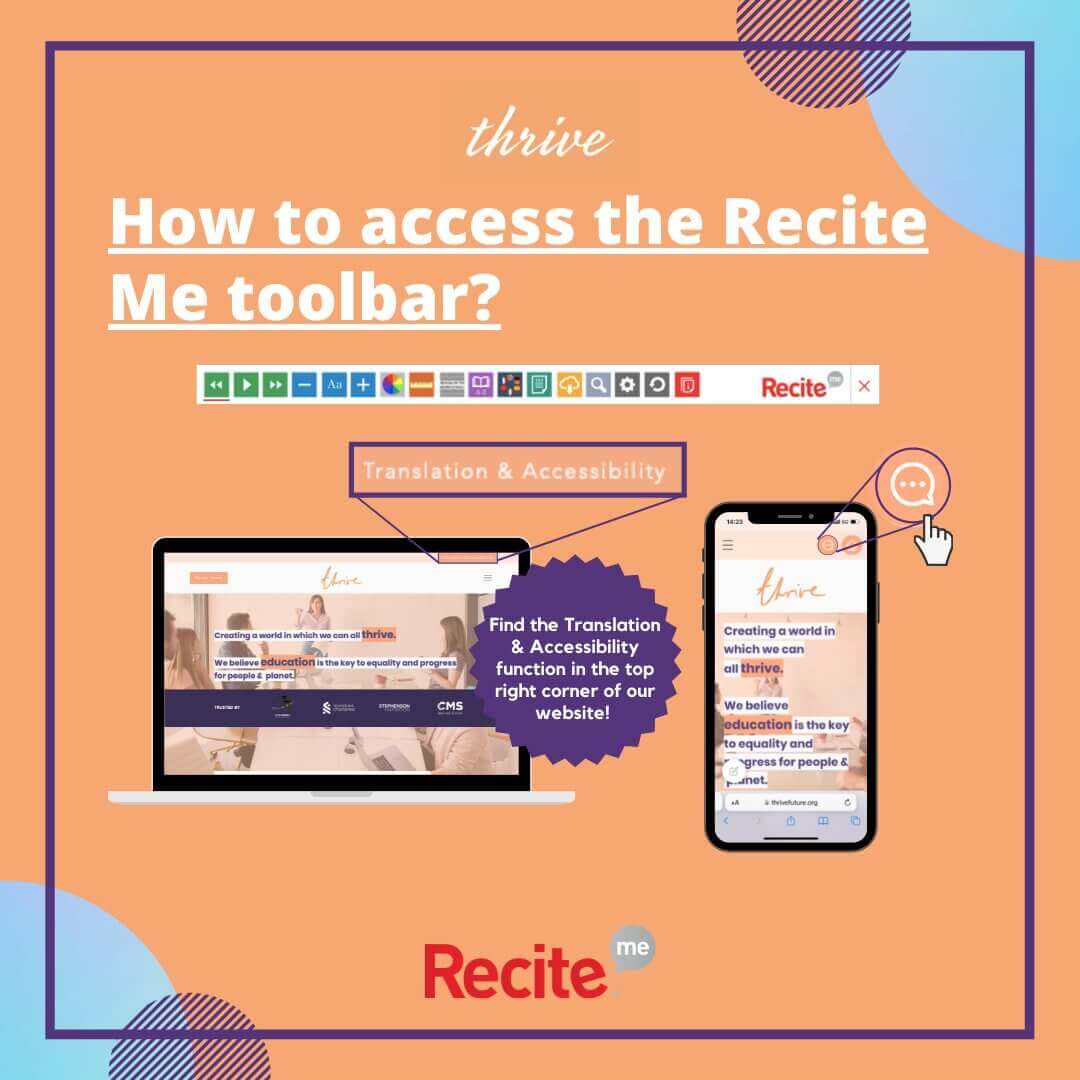
Happy Global Accessibility Awareness Day! We're delighted to share that our website is now digitally inclusive! 🚀
You can dismiss @GAADBot as naming and shaming, not contributing, or whatever. But after 25+ years in this industry, the jaded, cynical person I am today absolutely loves dipping into this furiously updating timeline as a bit of a mid-day catharsis.
Takeaways
A big takeaway here is to not let marketing run your GAAD events, messaging, social media, or… anything. Turn it over to your accessibility subject matter experts or maybe spend the day learning only. If you are an accessibility pro whose marketing team used your likeness and/or quote and failed to give it alternative text, use this post to show how your exclusion from the process is a black eye for the organization and your reputation.
Another takeaway is that organizations shared by this Twitter bot may not have their own house in order as a truly inclusive environment. Searching @GAADBot’s timeline for mention of a company pitching you on its accessibility consulting or remediation or product or services might be a good place to start in your vendor due diligence.
And yet another takeaway is that as accessibility practitioners, perhaps we have done a terrible job communicating how and why these efforts need to be more than performative. Maybe go back and educate the marketers and social media folks. Help put in place processes to catch genuine mistakes as well as messaging disconnected from the community. In short, do our jobs too.
Not only were their tweet images devoid of alt text, but the numbers he called were met with hang-ups, the web sites were referral sites, and none of them use accessiBe.
We all know GAAD is often used for performative accessibility efforts, we all know accessiBe prefers lying over actual outcomes, and so it is no surprise that these traits came together so brazenly last year despite a very public commitment not to lie any more.
Update: 26 March 2026
It’s 2026 and if companies are posting their GAAD efforts on MechaHitler‘s CSAM-generating post-Twitter platform, I encourage you to understand that the medium is the message and somebody has their priorities backward.
“But after 25+ years in this industry, the jaded, cynical person I am today absolutely loves dipping into this furiously updating timeline as a bit of a mid-day catharsis.”, I can’t claim the time served but I like the laughs too.
Early leader in the mirth stakes is Dortmund Unis alt training course tweet.
Leave a Comment or Response